Meta has released Muse Spark Open, an open-weight AI model built for coding, tool use, and tasks that take multiple steps to finish. Released on October 15, it has 816 billion total parameters, with around 42 billion active for each token, and a context window of one million tokens.
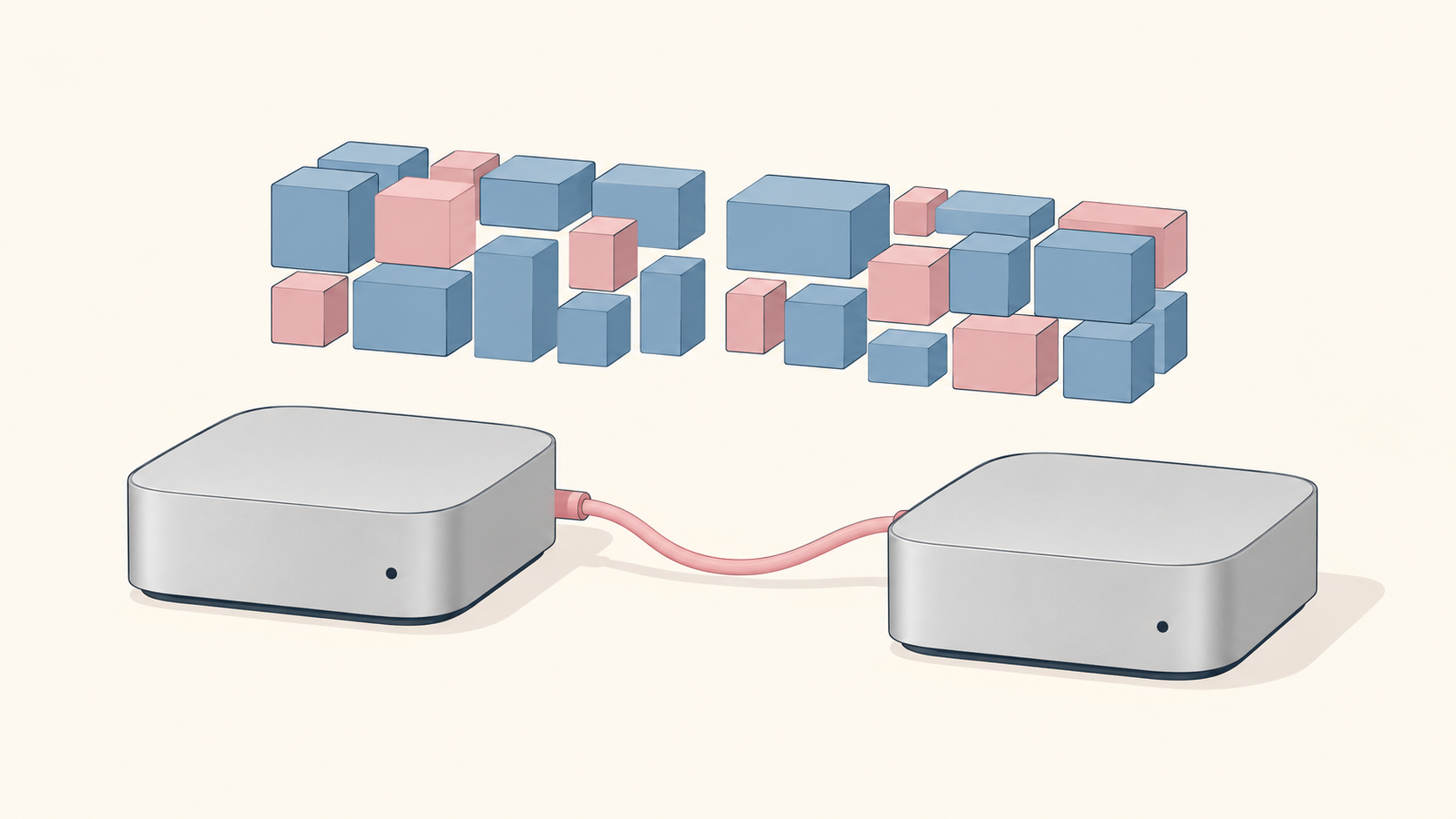
The local AI part is the hardware setup. Meta worked with Apple to run the model across two M5 Ultra Mac Studios using MLX. Each machine has 512GB of unified memory, giving the pair roughly a terabyte to work with.
What Muse Spark Open Can Do
According to Meta’s model card, the model accepts text, images, video, and audio, and produces text. That lets developers build assistants that work with screenshots and recordings alongside written instructions.
Meta positions it for coding agents that explore repositories, edit files, call tools, and recover when a step fails. The company says its local demonstrations included making changes to the Ice Cubes Mastodon client and controlling DaVinci Resolve to review and crop footage.
Those are Meta’s demonstrations. They do not establish how reliably the model will handle every project.
Running It Locally Still Takes Serious Memory
The mixture-of-experts design means only part of the model works on each token. It reduces computation, but the full set of weights still needs to be stored somewhere.
In Apple’s MLX tests, the NVFP4 version had a model memory footprint of about 493GB. NVFP4 is a 4-bit format that reduces the space used to store the weights. Apple says the additional memory needed during inference prevents this setup from fitting on a single 512GB Mac Studio.
Meta’s model card separately lists at least 700GB of VRAM for NVFP4 GPU deployment. The compressed model footprint and the memory needed to run it are different figures.
Apple reports about 25 tokens per second across two M5 Ultra systems using tensor parallelism, which splits calculations between machines. Four systems reached about 36.7 tokens per second. These are Apple’s measurements at an 8,192-token context, measured over 128 generated tokens, rather than independent tests or results at the full million-token limit.
Where to Get the Model
Meta’s release announcement lists support for MLX, llama.cpp, SGLang, vLLM, and other inference engines. Downloads are available through Hugging Face, with hosted access through providers including OpenRouter, Together AI, and Fireworks.
The weights use the Muse Model License, which includes usage and attribution conditions. Developers should check those terms before building a product around it.
For local users, the download is available now. Running it still means planning around hundreds of gigabytes of memory, even with 4-bit weights.