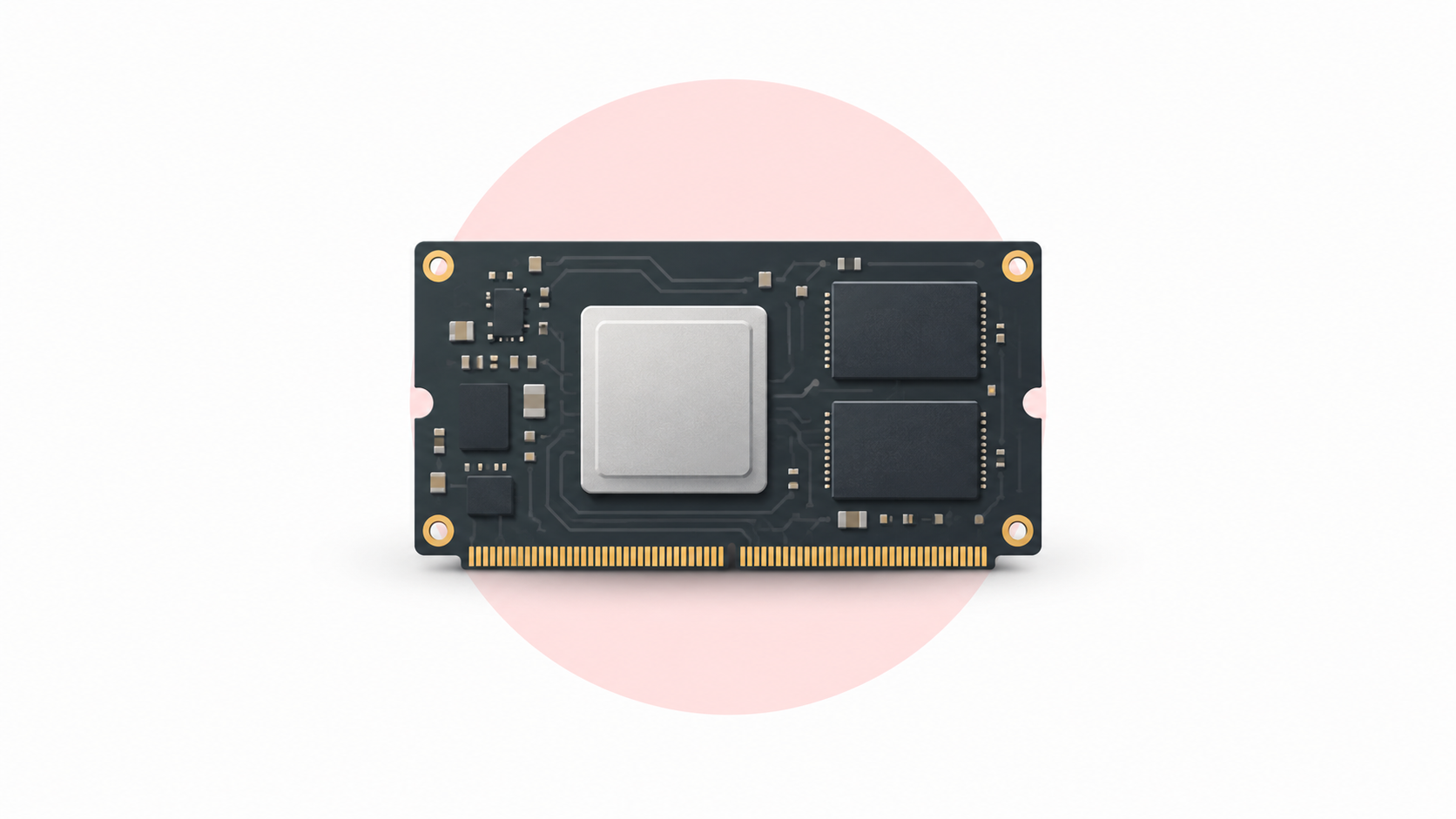
LattePanda launched Mu Ultra on September 9, 2026. This small x86 compute module comes with either a Core Ultra 5 226V or Core Ultra 7 256V processor and 16GB of memory, designed to run AI directly on the device. The Core Ultra 5 development kit currently costs $643.
It’s worth asking whether that price makes sense. So this article’s goal is comparing it with the two obvious alternatives: NVIDIA’s Jetson Orin Nano Super and a Raspberry Pi 5 with an AI HAT+ 2.
What Mu Ultra Can Run Locally
Mu Ultra combines a CPU, an Intel Arc integrated GPU, and an NPU designed for neural-network workloads. It supports Windows 11 and Ubuntu 24.04, along with tools such as OpenVINO, llama.cpp, and Ollama.
According to LattePanda, it generates around 18 tokens per second with Qwen3.5-9B and 55 tokens per second with Qwen3.5-2B. Both tests used 4-bit weights through OpenVINO GenAI on the integrated GPU. The announcement does not identify which processor version was tested, so these numbers should not be assumed to apply equally to both kits.
For vision workloads, DFRobot reports roughly 235 frames per second with YOLO26n on the Core Ultra 5 version’s NPU. This measures the model’s forward pass in OpenVINO. A complete camera application also needs to capture images, prepare them for the model, and process the results.
Why 16GB of RAM Is Not 16GB of VRAM
Both Mu Ultra versions come with 16GB of LPDDR5X-8533 memory, with up to 11.6GB available for allocation to the integrated GPU.
That extra room can help with quantized models, but the GPU uses the same memory as the rest of the system. Your operating system and other applications also need space within that 16GB. The more you give to the GPU, the less remains for everything else.
The model’s weights are not the only things taking up memory. The KV cache holds information from earlier tokens, while inference also needs temporary buffers. We explain how quantization affects memory use in our quantization guide.
Mu Ultra offers more room to work with, but you still need to check whether the entire workload fits.
How Mu Ultra Compares With Jetson Orin Nano Super
NVIDIA’s US store lists the Jetson Orin Nano Super developer kit at $399, following a price increase from $249 in July 2026. That is a 60% increase, and the kit was also out of stock at NVIDIA’s own store at the time of writing.
We are now comparing $643 with $399. That is still a noticeable difference, but the gap is smaller than it was six months ago. If you can buy Jetson near $399, you save $244 compared with Mu Ultra, while getting half the memory.
Jetson comes with 8GB of shared LPDDR5 memory and an Ampere GPU with CUDA and Tensor Cores. Those features make it worth considering for smaller language models, camera processing, and robotics projects. Access to CUDA’s software ecosystem is also a good reason to choose it.
The main limitation is that shared 8GB. Your system and GPU both use it, so model weights cannot take up all the space. Mu Ultra offers twice the total memory and uses an x86 processor instead of Jetson’s Arm processor. If your project relies on x86 software or needs models that exceed Jetson’s memory budget, the extra cost can make sense. Otherwise, you could be spending another $244 on memory headroom you never use.
What About Raspberry Pi AI HAT+ 2?
The Raspberry Pi AI HAT+ 2 gives a Raspberry Pi 5 a Hailo-10H accelerator with 8GB of dedicated onboard memory. The HAT currently costs $130, and you will also need a Pi if you do not already own one.
Its memory is separate from the Pi’s system RAM. Supported AI models run on the HAT while the Pi uses its own memory for the application. That keeps the setup fairly clean.
Raspberry Pi and Hailo describe uses such as captioning camera events, analysing images, and turning voice commands into short actions. If you already have a Pi project, the HAT could help you add those features.
Model compatibility is the main catch. A model taking up less than 8GB does not automatically mean the HAT supports it. Check the supported model list before choosing it as the cheaper option for the job you have in mind.
Which Kit Makes Sense for Your Project?
Jetson is a sensible starting point if you can find it near its $399 listed price and your workload fits comfortably within 8GB of shared memory. That means allowing space for the KV cache, inference buffers, and operating system alongside the model weights.
Mu Ultra becomes worth considering when you need more memory than Jetson offers, provided the workload still fits within Mu Ultra’s limits. It also makes sense for projects that require x86 software. The extra memory and bandwidth are useful, but the additional $244 should solve a problem your project actually has.
If you already have a Raspberry Pi project, the AI HAT+ 2 could be a useful addition when a supported model handles the job. For a new build focused mainly on smaller local models, check Jetson first and compare the prices and kits actually available to buy.
Sources
LattePanda Mu Ultra specifications